How AI Finds Photo Locations Without EXIF Data
Have you ever scrolled through your camera roll, stumbled upon a stunning photo, and thought, "Where on Earth was this taken?" You're not alone. Many of our most cherished digital memories lack GPS metadata, leaving us with beautiful but mysterious images. This is especially true for older photos, scanned pictures, or images downloaded from social media.
For years, this meant the location's story was lost. But today, technology has a powerful new answer. This article dives into the cutting-edge AI that can find a photo's location even when the usual location tags, known as EXIF data, are missing. We'll explore how modern tools analyze visual clues within the picture itself to solve the puzzle. With a platform like PhotoLocation AI, you can unlock these hidden stories with just a single upload.

The Challenge of Photos Without Location Data
Finding a location from a photo used to rely almost entirely on embedded GPS coordinates. When that information isn't there, the search becomes much harder. Understanding why this data is often missing is the first step to appreciating the new AI-driven solutions.
Why EXIF Data Often Fails
EXIF (Exchangeable Image File Format) data acts as a digital fingerprint for your photos. It stores camera settings, the date, and—when enabled—the exact GPS coordinates where the image was captured. However, this data is surprisingly fragile and frequently absent for several common reasons:
- Privacy Settings: Many users and social media platforms intentionally strip location data from photos before sharing them online to protect privacy.
- Older Devices: Older digital cameras or phones may not have had GPS capabilities to begin with.
- Camera Settings: Geotagging is often a feature that must be manually enabled on a camera, and many people never turn it on.
- File Transfers: Sometimes, this metadata is lost or corrupted when a photo is edited, compressed, or transferred between devices.
Without this crucial data, you're left with only the visual image. Traditional methods struggle at this point, but this is where AI technology truly excels.
The Limitations of Traditional Reverse Image Search
Your first instinct might be to use a tool like Google Images for a reverse image search. While these tools are fantastic for finding visually similar images or identifying the source of a picture, they often fall short when it comes to geographic location.
A reverse image search engine is designed to match patterns and colors. It might show you hundreds of photos that look like your image—for example, other pictures of beaches or mountains. However, it usually can't tell you that your specific photo was taken at "Praia da Marinha, Portugal." It identifies similarity, not geography. This is the key limitation that makes a specialized photo locator an essential tool for anyone serious about finding where a picture was taken.
How AI Visual Analysis Works
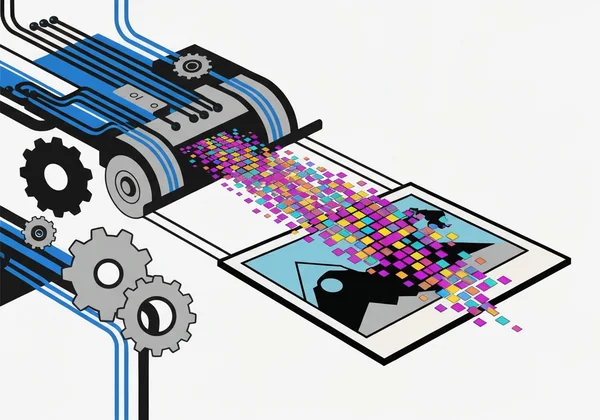
So, if there's no GPS data, how can a machine possibly identify a location? The magic lies in AI-powered visual analysis, which trains computer models to "see" and "understand" an image much like a human would. It breaks down the photo into distinct elements and cross-references them against vast databases of global information.
Landmark Recognition Technology
The most straightforward method AI uses is landmark recognition. The system is trained on millions of images of famous and not-so-famous landmarks around the world, from the Eiffel Tower to a unique local statue.
When you upload a photo, the AI scans it for these distinctive features. A neural network analyzes shapes, structures, and patterns, comparing them to its extensive internal library. If it finds a match for a specific bridge, monument, or building, it can pinpoint the location with a very high degree of confidence. This goes far beyond what a simple image search can do, as it specifically looks for geographically unique identifiers.
Environmental Clue Analysis
What if your photo has no famous landmarks? This is where AI's deeper intelligence comes into play. The system can analyze subtle environmental clues to narrow down the possibilities.
- Vegetation: Different types of trees, flowers, and plants are unique to specific climates and regions. An AI can identify a Joshua Tree and infer the photo was likely taken in the American Southwest.
- Topography: The shape of mountains, the color of the soil, or the type of rock formations can be strong indicators of a particular geographic area.
- Weather Patterns: Even the quality of light or the type of clouds can provide subtle hints that, when combined with other data, help the AI make a more educated guess.
This process elevates the AI beyond simple pattern matching. It becomes a digital detective, piecing together visual clues to crack the location code.
Architectural Style Detection
Beyond famous landmarks, the general style of architecture in a photo provides powerful clues. An AI can be trained to recognize regional building characteristics that signal a geographic origin.
For example, it might identify the whitewashed, blue-domed buildings of the Greek islands, the distinct gabled roofs of Amsterdam, or the unique timber-framing of a traditional Japanese home. By recognizing these cultural and historical elements in the background of your photo, the AI can drastically narrow its search, even if the main subject is just a person or a pet.
The PhotoLocation AI Analysis Process
While the technology behind AI location analysis is fascinating, watching it work in real-time is where the magic truly happens. At PhotoLocation AI, we've built a sophisticated system that combines all these techniques into a seamless, user-friendly experience. Grasping the concepts behind AI location analysis is important. But witnessing it firsthand? That's where true understanding begins. That's why we've made our AI's reasoning process transparent and easy to follow.

The Multi-Step Analysis Pipeline
When you upload a photo to our platform, it doesn't just go through one single check. Instead, it enters a multi-step analysis pipeline designed for maximum accuracy.
- Initial Scan: The process starts with a quick check for any existing EXIF metadata. If GPS data is present, we can provide an instant result.
- Feature Extraction: If there's no metadata, our AI begins extracting key visual features—identifying potential landmarks, analyzing architectural styles, recognizing text (like street signs), and cataloging environmental elements.
- Cross-Referencing: The AI doesn't rely on a single clue. It cross-references multiple data points. For instance, it might find a specific building (Clue A) and a unique type of tree (Clue B) and search for locations that contain both.
- Confidence Scoring: Based on the strength and number of matched clues, the system generates a confidence score. This tells you how certain the AI is about its proposed location, ensuring you understand the reliability of the result.
Visualizing the AI's "Thought Process"
One of the unique features that sets PhotoLocation AI apart is our commitment to transparency. We don’t just give you an answer; we show you how we got there.
After the analysis, our platform can display the AI's reasoning. You might see it highlight a building in your photo and label it as "Landmark: St. Mark's Basilica," or it might outline a mountain range and note its topographical features. This visualization demystifies the AI, builds trust, and makes the process of discovery more engaging and educational. You get to see the clues your photo held all along.
Real-World Applications and Success Stories
This technology isn't just a fun gimmick; it has practical and meaningful applications for everyone from casual memory keepers to professional photographers. It empowers users to reconnect with their past and plan for their future.
Solving Family Photo Mysteries
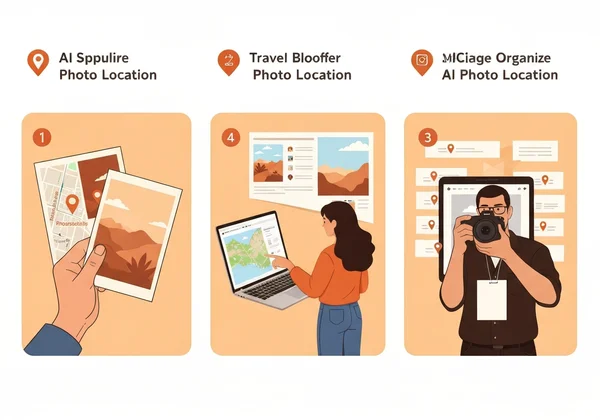
So many of us have boxes of old family photos or digital folders filled with pictures from forgotten trips. How do you find where that old vacation photo was taken? This is one of the most powerful uses for AI location finders.
Users have rediscovered forgotten vacation spots from their childhood, allowing them to revisit those places or simply add context to their family albums. By organizing photo collections by location, you can create a visual map of your life's journey, transforming a chaotic camera roll into a meaningful, browsable story.
Professional Photography Applications
For professional photographers and content creators, identifying a location from a photo is a crucial part of the job.
- Location Scouting: A travel blogger can upload an inspiring, uncredited photo from social media to find the exact spot and plan their next shoot.
- Copyright & Source Verification: Journalists and agencies can use the tool to verify the origin of an image and ensure it's being used in the correct context.
- Portfolio Management: Photographers can use the tool to retroactively tag their entire portfolio with accurate location data, making it more organized and searchable for clients.
Your Journey to Photo Location Discovery
Today's AI technology breathes new life into old photos, transforming forgotten memories into tangible, place-based stories. Imagine turning forgotten snapshots into geographical adventures—that's the power of modern AI location analysis. This technology cracks open visual mysteries that once seemed impossible to solve, working like a digital detective that can read between the pixels when EXIF data fails.
Whether you are a casual user trying to organize your family photos, a photographer scouting your next location, or just a curious person wanting to know where a beautiful picture was taken, PhotoLocation AI offers a powerful, transparent, and easy-to-use solution. You no longer have to wonder about the stories behind your images.
Ready to see our AI in action? Upload your photo today and start your journey of discovery.
Photo Location Identification Without EXIF
How accurate is AI photo location identification?
The accuracy of AI location identification depends heavily on the photo's content. If the image contains clear, unique landmarks, accuracy can be extremely high. For more generic scenes, like a beach or forest, the AI will provide a broader region or its best guess based on environmental clues. Our platform includes a confidence score to help you understand the result's reliability.
Can AI identify locations in any photo?
While incredibly powerful, the technology has limits. It struggles with very low-quality images, photos taken indoors with no outside views, or extreme close-ups that lack any geographic context. For the best results, use photos with clear background elements. To see what's possible, you can try our free tool with one of your pictures.
How long does AI location analysis take?
The analysis is surprisingly fast. Thanks to our optimized AI pipeline, the process of uploading, analyzing, and displaying the results typically takes only a few seconds. You get near-instant feedback without a long wait.
Is my photo data secure during analysis?
Absolutely. We take user privacy very seriously. Your photos are used only for the purpose of location analysis. Our privacy policy clearly outlines how we handle your data, ensuring that your images remain secure and are not stored or used for any other purpose.